
Bolting
Pick the type you can see on the bench — the DIN or ISO number is underneath. Every page has full dimension tables and available materials.
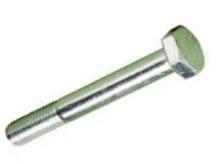 Hex bolts
Hex head bolt, part threaded
DIN 931
Hex bolts
Hex head bolt, part threaded
DIN 931
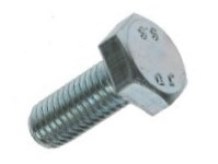 Hex setscrews
Hex setscrew, fully threaded
DIN 933
Hex setscrews
Hex setscrew, fully threaded
DIN 933
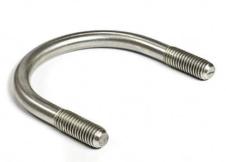 U-bolts
U-bolt
U-bolts
U-bolt
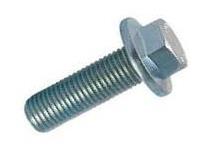 Hex flange bolts
Hex flange bolt
DIN 6921
Hex flange bolts
Hex flange bolt
DIN 6921
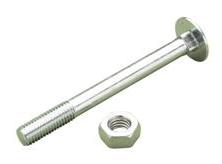 Coach bolts
Coach bolt
DIN 603
Coach bolts
Coach bolt
DIN 603
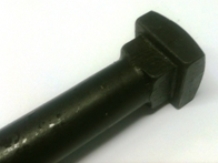 Square square bolts
Holding-down bolt
BS 7419
Square square bolts
Holding-down bolt
BS 7419
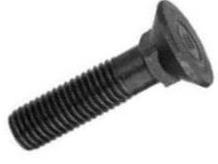 Plough bolts
Countersunk square neck bolt (plough bolt)
DIN 608
Plough bolts
Countersunk square neck bolt (plough bolt)
DIN 608
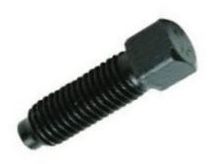 Square head bolts
Square head bolt, dog point
DIN 479
Square head bolts
Square head bolt, dog point
DIN 479
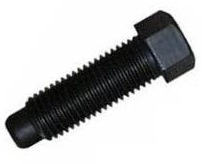 Dog point bolts
Hex bolt, dog point
DIN 561
Dog point bolts
Hex bolt, dog point
DIN 561
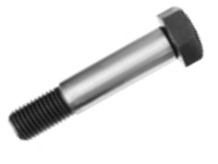 Fit bolts
Fit bolt (close tolerance)
DIN 609
Fit bolts
Fit bolt (close tolerance)
DIN 609
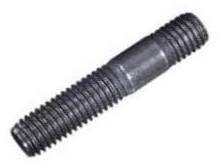 Studs
Engineer stud (metal end 1.25d)
DIN 939
Studs
Engineer stud (metal end 1.25d)
DIN 939
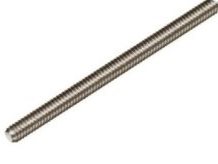 Threaded rod
DIN 976-1
Threaded rod
Threaded rod
DIN 976-1
 Swing bolts
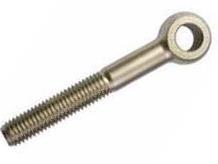
Swing eye bolt
DIN 444
Swing bolts
Swing eye bolt
DIN 444
 Lifting eyebolts
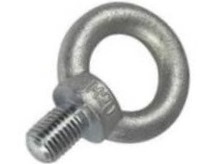
Collared lifting eyebolt
DIN 580
Lifting eyebolts
Collared lifting eyebolt
DIN 580
 Turnbuckles
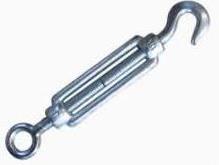
Turnbuckle (rigging screw)
DIN 1480
Turnbuckles
Turnbuckle (rigging screw)
DIN 1480
More specifications are being added to this range. If what you need isn't listed yet, send the spec and we'll confirm stock and price directly.
What is the difference between a bolt and a setscrew?
In UK trade usage a bolt (DIN 931) has a plain shank below the head and a setscrew (DIN 933) is threaded along its full length. Use the bolt where the joint plane should bear on the plain shank, the setscrew where thread is needed right up to the head.
Which square neck bolt do I need?
Three patterns share the anti-rotation square neck: the coach bolt DIN 603 with a smooth domed head, the countersunk DIN 608 that pulls flush with the surface, and BS 7419 holding-down bolts for securing steelwork to foundations. Choose by the job: smooth finish, flush finish, or foundation fixing.
Which eye bolt is for lifting?
Only the collared lifting eyebolt DIN 580 is a lifting point - the swing bolt DIN 444 is a quick-release clamping bolt and is not rated for lifting. Certification for lifting eyebolts is available on request.
Price and availability
Tell us sizes, grades and quantities.