
Machine Screws
Pick the head type you can see on the bench — the DIN or ISO number is underneath. Every page has full dimension tables and the materials we stock.
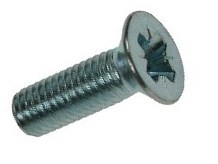 Pozi countersunk machine screw
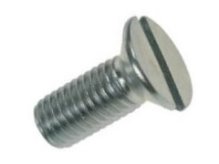 Slotted countersunk machine screw
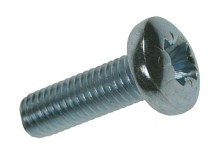 Pozi pan head machine screw
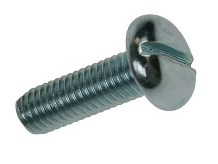 Slotted pan head machine screw
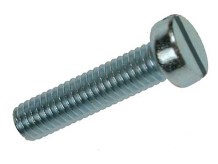 Slotted cheese head screw
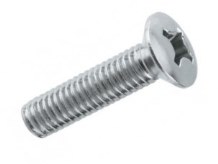 Pozi raised countersunk machine screw
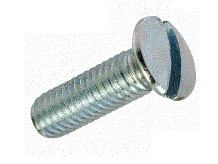 Slotted raised countersunk machine screw
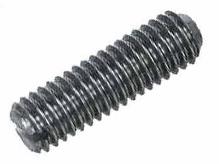 Slotted grub screw, cup point
DIN 438
Slotted grub screw, cup point
DIN 438
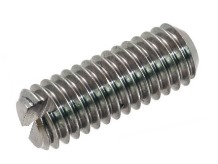 Slotted grub screw, flat point
DIN 551
Slotted grub screw, flat point
DIN 551
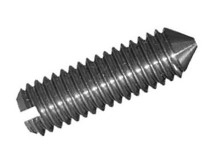 Slotted grub screw, cone point
DIN 553
Slotted grub screw, cone point
DIN 553
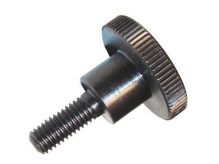 Knurled thumb screw, high type
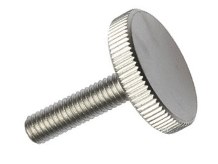 Knurled thumb screw, thin type
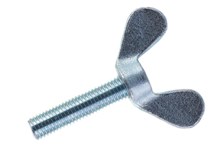 Wing screw
More specifications are being added to this range. If what you need isn't listed yet, send the spec and we'll confirm stock and price directly.
What is the difference between a machine screw and a self-tapping screw?
Machine screws have a parallel metric thread and fasten into a pre-tapped hole or nut; self-tapping screws cut or form their own thread as driven. Machine screws suit precise, repeatable assembly; self-tappers suit sheet metal and one-off fixings.
Should I use pozi or slotted machine screws?
Pozi drive is generally preferred for production assembly because the driver centres itself and cam-out is reduced. Slotted remains widely used in electrical work, restoration and traditional applications. Both drives are available across most head styles.
Which head type gives a flush finish?
Countersunk screws (DIN 965 pozi, DIN 963 slotted) sit flush in a countersunk hole. Raised countersunk (DIN 966, DIN 964) sits flush at the rim with a shallow domed crown. Pan and cheese heads sit proud and suit work where flush mounting isn't needed.
Price and availability
Tell us sizes, grades and quantities.