
DIN 6926 Nylon Insert Flange Nuts
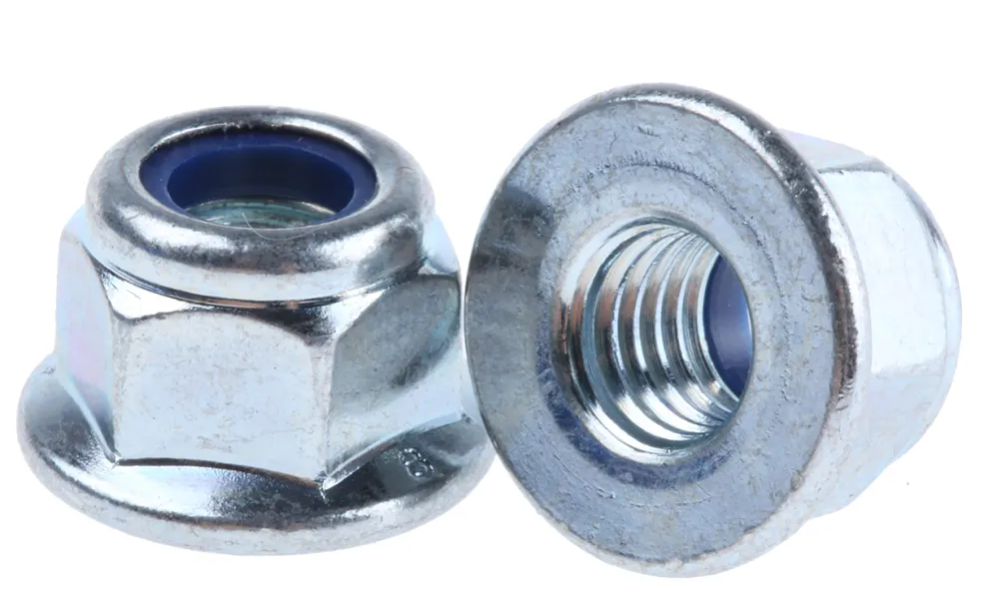
DIN 6926 covers hexagon flange nuts with a nylon locking insert — combining the built-in washer face of a flange nut with insert locking, closely related to ISO 7043. We supply DIN 6926 flange nuts in steel and stainless steel across a range of metric sizes. Send us your requirement and we'll quote within one working day.
Also known as: Nyloc.
DIN 6926 dimensions
| Diameter | Pitch | Overall height | Across Flats | Diameter of Flange |
|---|---|---|---|---|
| M4 | 0.7mm | 4.65mm | 7mm | 10mm |
| M5 | 0.8mm | 7.1mm | 8mm | 11.8mm |
| M6 | 1mm | 9.1mm | 10mm | 14.2mm |
| M8 | 1.25mm | 11.1mm | 13mm | 17.9mm |
| M10 | 1.5mm | 13.5mm | 15mm | 21.8mm |
| M12 | 1.75mm | 16.1mm | 18mm | 26mm |
| M16 | 2mm | 20.3mm | 24mm | 34.5mm |
Materials & strength
Insert locking with load spread
The nylon collar resists vibration loosening while the integral flange spreads the clamping load like a built-in washer.
What is a DIN 6926 flange nut?
DIN 6926 covers hexagon flange nuts with a nylon locking insert, combining the washer-like bearing face of a flange nut with nylon insert-style resistance to loosening. It suits vibration-prone joints where load spreading is also wanted.
What is the difference between DIN 6926 and ISO 7043?
The standards are closely related, although dimensional or technical differences may exist. If your drawing specifies ISO 7043, send us the requirement and we can identify the appropriate product.
How does DIN 6926 differ from DIN 6923?
DIN 6923 is an all-metal flange nut whose serrated version locks by biting into the surface, while DIN 6926 locks through a nylon insert and is less likely to mark the mating face than a serrated flange. The choice usually comes down to surface finish and service temperature.
Need DIN 6926 in a non-standard size or material?
Send us your drawing — specials quoted within one working day.